Start with what you’re filing and why accuracy matters
The 1095-C is tied to employer-sponsored health coverage reporting, and it must match the underlying data used for employee eligibility and offer-of-coverage efile 1095 c tracking. If the information is inconsistent across internal systems, you may need to correct or reissue statements later. A good buying process starts by verifying your workflow, not just the software features.
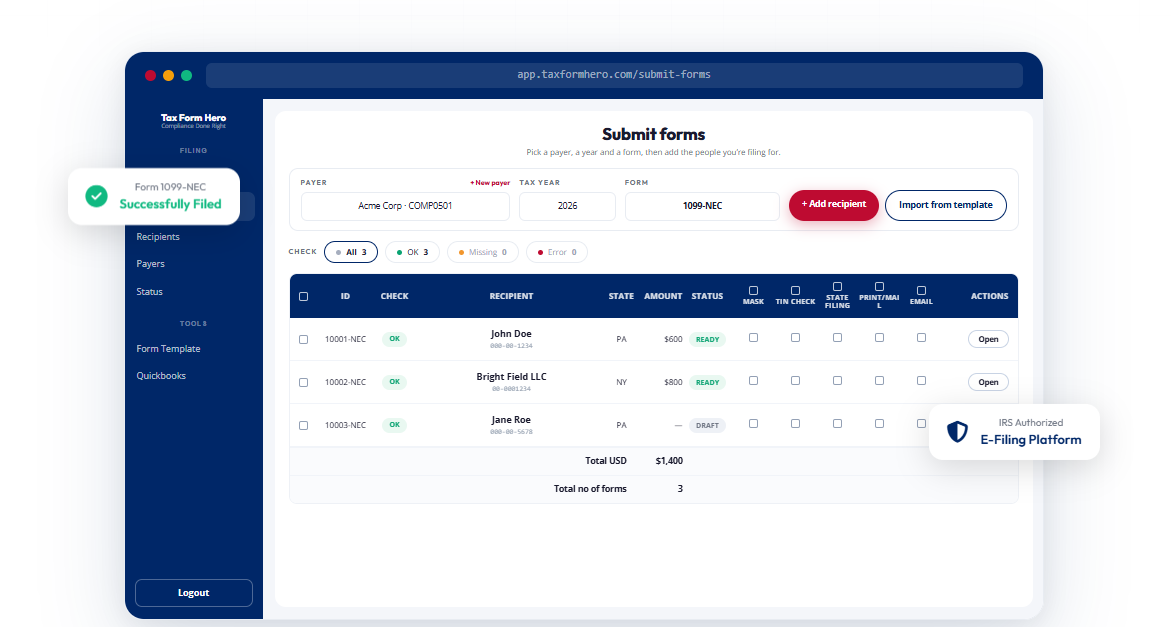
Ask whether the platform is built for the complete lifecycle: data entry, validation, submission, and document delivery where applicable. Many buyers underestimate how often they need to reconcile employer coverage codes, months of coverage, and employee identifiers. Look for tools that support review screens and error checks so you can catch missing fields or formatting issues early. The right provider should also help you understand what “file-ready” means for IRS submission so you don’t waste time chasing compliance after you’ve exported data.
Compare submission capabilities, compliance support, and reporting features
Not all services handle reporting the same way, so compare the submission path and what the tool actually does for you. Some buyers want a streamlined filing experience for 1099 online filing service workflows, while others need a broader system that can handle multiple document 1099 online filing service types in one place. If you file W-2s, 1099s, or other employment-related forms alongside 1095-C, choose a provider that can reduce duplicate data entry. Consolidation can prevent mismatches and help you keep a single source of truth.
Evaluate how the provider addresses buyer-intent priorities like validation, audit trail readiness, and end-to-end support. For example, a strong 1099 misc online capability typically includes status tracking and clear confirmation that your submission was accepted. Even though the 1095-C is a different form, the same underlying need applies: you want visibility into what was sent and when, plus guidance if something needs fixing. Look for documentation that explains required fields, common submission errors, and how to correct data without starting over.
Assess ease of use, data handling, and how it fits your team
Ease of use matters because the person entering or importing data may not be a tax specialist. Choose a platform with guided steps, clear prompts, and import formats that align with your existing payroll or HR exports. file 1099 misc online If your team uses spreadsheets, check whether the service supports importing and mapping fields reliably. If you rely on HR platforms, confirm whether the workflow can ingest data with minimal manual cleanup.
For buyers, it’s also important to consider how the tool helps you coordinate responsibilities across stakeholders. Many organizations split tasks between HR, payroll, and finance, which creates opportunities for delays and conflicting edits. A good system supports controlled review, so employees can be validated before final submission. You should also check whether the platform provides downloadable copies and internal records for your files, so you can respond quickly to questions that arise after filing.
1099 filing service
Conclusion
Start by mapping your current process, then confirm that the platform supports validations, clear acceptance outcomes, and practical data handling for real-world teams. taxformhero.com supports electronic filing for employment tax documents alongside 1099s, W-2s, and other forms, giving you a more consistent compliance experience. Before you commit, compare how each provider handles buyer pain points such as import reliability, error prevention, and support when changes are required. A platform that focuses on end-to-end filing helps you move from “data prepared” to “file submitted” with fewer surprises. When the tool is easy to review and grounded in compliance requirements, you can spend less time troubleshooting and more time ensuring your records are correct. For organizations ready to file with confidence, taxformhero.com is a practical place to start.
